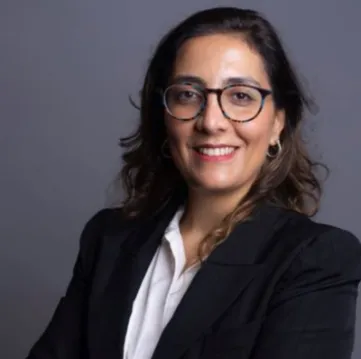
Bio
Ph.D. in Environmental Sciences from São Paulo State University – UNESP (2018), with a research internship at the Autonomous University of Barcelona (UAB); holds a Master's degree in Civil and Environmental Engineering with a focus on Sanitation, also from UNESP (2013); an MBA in Environmental Management and Technologies from the Polytechnic School of University of São Paulo – USP (2010); and a Bachelor's degree in Administration from the University of Sorocaba (2005).
Worked in the private sector and with the third sector (2005–2008), as well as in environmental and sustainable development public policies (2009–2013) at various levels - including municipal and state governments, public consortia, river basin committees, and conservation units.
From 2014 to 2018, pursued a Ph.D. at UNESP – Sorocaba campus with a CAPES scholarship, and in 2015, served as a lecturer in the MBA in Environmental Management and Sustainability at UFSCar – Sorocaba campus. Between 2018 and 2021, worked as a Postdoctoral Researcher (FAPESP) in the Department of Public Management at the Getulio Vargas Foundation (FGV/EAESP), and in 2022, as a Postdoctoral Researcher at Ghent University (Belgium) in the ORIENTING Project, part of the European Union's HORIZON Program.
In 2022 and 2023, also worked as a consultant for Brazil’s National Basic Sanitation Plan (PLANSAB), the Integrated Solid Waste Management Plan (PGIRS) for the Upper Tietê River Basin, and a Payment for Environmental Services (PES) project in the Brazilian Amazon.
From August 2023 to July 2025, served as a Postdoctoral Researcher (FAPESP/CNPq) at FGV/EAESP in the Amazon+10 Project. Currently, he is an Associate Researcher at the Center for Innovation, Research, and Dissemination (CEPID) in Global Environmental Change Governance (FGV Earth), and a lecturer in the Life Cycle Assessment course at UNESP – Sorocaba campus.
Has experience in the fields of Administration and Engineering, with focus on: Cities, Environmental and Urban Policies, Integrated Waste Management, Circular Economy, Bioeconomy, Life Cycle Sustainability Assessment, and Climate Change.
