Research shows that only 15% of companies have female suppliers

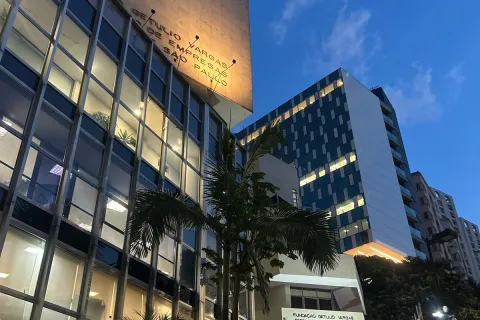
A study by the Getulio Vargas Foundation, which investigated how companies consider the diversity factor when hiring suppliers, found that among the 109 companies analyzed, only 15% have programs aimed at hiring suppliers owned by socially underrepresented groups: women, Afro-descendants and LGBTs.
Conducted by the Center of Excellence in Logistics and Supply Chain (FGVcelog), in partnership with the Center for Studies in Organizations and People (FGVneop), the objective of the study was to identify the participation of businesses led by women, and other underrepresented minorities, in the supply chain of large companies in Brazil. In addition, the survey also mapped the main barriers faced for these companies to engage in affirmative buying.
Ahead of this study, researcher Priscila Miguel points out that the corporate world currently talks a lot about ESG, that is, environmental, social, and corporate governance. However, many times the procurement sector does not understand and internalize this concept as much as the other sectors of an organization.
"Both here in Brazil and in other countries, we see the ESG agenda growing among organizations and very much associated with diversity, equity, and inclusion, so we wanted to understand if this growth also occurs in the procurement area of these organizations, and we realized that there is a long way to go," said the researcher, who reiterates the need for purchasing companies to review their processes and make procurement policies more flexible, which are usually designed for large companies, prioritizing only profits to the detriment of the social context.
Inclusive procurement and diversity suppliers
Inclusive procurement characterizes the ability of an organization to develop and implement metrics that contemplate social inclusion criteria in its procurement decisions. For a company's procurement sector to be considered inclusive, 51% or more of the ownership of the supplier companies must belong to underrepresented social groups or minorities.
"They are usually small companies with difficult access to compete on an equal footing with larger companies," said Priscila Miguel. According to the researcher, these suppliers are also able to highlight these minorities as consumers.
"When a company hires women and other minority suppliers, this company can learn more privately about specific demands of society, compared to other broader and more homogenized suppliers. These suppliers represented by minorities can also be a source of innovation and flexibility, generating socioeconomic development for communities, in addition to combating social inequality", the researcher deepened.
Understanding the study
Priscila, who developed the study together with researchers Maria José Tonelli, from the School of Business Administration of São Paulo (FGV EAESP) and Andrea Lago da Silva, from the Federal University of São Carlos (UFSCar), contextualizes that the interest in carrying out this research arose from a concern of UN Women, which has several signatory companies committed to the principles of female empowerment. These companies work to get organizations to buy more from women-led suppliers, since among the signatories themselves, less than 1% of their suppliers come from women-led companies.
It was from this scenario that FGVneop, FGVcelog and the UN came together with the objective of dialoguing with companies and suppliers, in order to understand what helps to implement the programs, what stage the companies are in, among other issues. From the analysis of 21 interviews, some relevant points were highlighted to promote this inclusion, such as: the importance of certification for organizations that carry out inclusive procurement as a way to encourage the practice, and the need for Brazil to have a specific Inclusion Policy for the procurement sector.
"Most of the time, when there is inclusion of minorities among suppliers, this usually occurs voluntarily among companies that are in the ESG context," Priscila pointed out.
The researcher also points out that in countries such as the USA, the United Kingdom, Canada, and Australia there are similar inclusion programs, also aimed at other groups of social minorities such as immigrants, blacks, and aborigines.
The study won an honorable mention in the Impact Projects Award from FGV EAESP.
To learn more about FGVcelog, click here.