Marketplace in Brazil: Master's research shows what platforms will look like in 2032
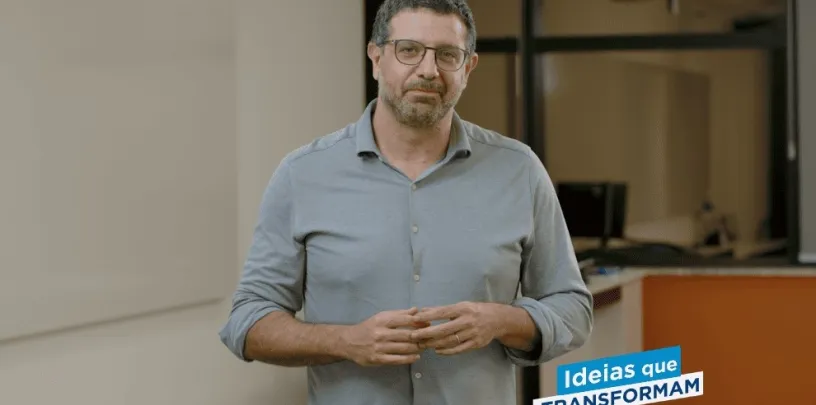
Technology in the digital environment has been evolving rapidly in the e-commerce marketplace market. With this in mind, Fabio Davidovici , a former student of the Professional Master's in Administration (MPA) at the São Paulo School of Business Administration (FGV EAESP) and CFO of Aramis , one of the Brazilian leaders in fashion retail, focused on what e-commerce marketplace platforms will look like in Brazil in a 10-year horizon.
Most studies in this field assume the current business model of marketplaces and do not take into account how future technologies and changes in consumer habits could radically impact the dynamics of this industry in the coming years.
The research is qualitative in nature, and data collection included secondary sources and information from interviews with relevant social groups. As a result, a 2x2 matrix was developed indicating future scenarios and five respective technologies in practice, which could shape the future of the marketplace industry.
Fabio highlighted the great experience he had in the course, combining theory with practice and the new academic experiences provided by the MPA. “My experience at the MPA was really cool and I think the great thing about it is the practical experience with academia. I have always enjoyed understanding the power of articles and studies, I wanted to put this into practice and I really wanted to have the experience of writing academic articles,” he said.
Check out the full interview with Fabio Davidovici below.
What is your research object?
The study offers future scenarios for marketplaces in light of technological innovations, strategies and competition in the e-commerce ecosystem. To this end, a review of the evolution of e-commerce was carried out and the main drivers of change were identified, based on the assessment of political, economic, technological, social and environmental dimensions.
How relevant is the topic to society?
The contribution to administrative science is to articulate the multilevel approach, scenario theory and the consumption journey in the field of studies on the future of marketplace platforms.
For business practice, collaboration, in turn, is to study future technological trends in the digital consumption environment to possibly obtain a competitive advantage from the main marketplace platforms, as well as to present suggestions and implications for the main agents.
Do you have any professional connection to the topic?
Yes, I am CFO of Aramis, one of the leading Brazilian fashion retail companies. We reflect a lot on the future of retail and marketplace.
What is the current marketplace scenario like in Brazil?
E-commerce currently accounts for more than 11.5% of all retail in Brazil, and the figures for 2023 are impressive: revenue of R$254.4 billion and more than 108.4 million active buyers. One of the catalysts for this growth was the Covid-19 pandemic, which forced millions of people to make their first purchases remotely. Competition in supply has also increased, reaching almost 2 million online stores and leading to the need for new business models, such as “3P” marketplace platforms4, such as Mercado Livre, Americanas, Shopee, Amazon Brasil and Magazine Luiza. In addition to the astonishing growth in the number of agents, buyers, transactions and revenue, the business models themselves have evolved and consolidated themselves in the national market.
How do you see the growth of this market?
Ten years ago, online sales represented less than 2.6% of retail in the country, with revenue of R$35.8 billion and almost 38 million active buyers, with its growth and scope limited by several factors, such as logistics and delivery capacity, access and reliability of payment methods, restricted financial services, etc. Sales models without intermediaries (1P) were common and enhanced by search and price comparison sites, such as Buscapé and Google Product Search.
How do marketplace platforms operate in Brazil in practice?
Marketplace platforms have expanded their scope of action beyond bringing buyers and sellers together, offering complementary services in logistics, delivery, payment, credit, pricing, technology, import and others. In practice, this movement has led to significant changes in the complex e-commerce ecosystem, its agents and relationships.
Why did you decide to pursue a master's degree?
I love studying, it's one of my favorite hobbies. I love to enhance my practice with the gym. My motivation is to understand how the e-commerce ecosystem has undergone a revolution in the last decade in Brazil.
How was your experience at MPA? Was there anything you would like to highlight about the School?
My experience at the MPA was really cool and I think the best part is the practical experience with academia. I've always liked understanding the power of articles and studies, I wanted to put that into practice and I really wanted to have the experience of writing academic articles. The institution is very prestigious and that was one of the reasons I chose it, in addition to being close to my home. The combination of online and in-person classes also helped. Another important point is the professors and colleagues, along with the vision of the future that the course provides.
What are the future prospects for the area?
The transformation of the industry could be profound and comprehensive, bringing important implications for economic agents, as summarized in the figure below.

If in a decade we have experienced profound transformations in this ecosystem, what can we expect in the next 10 years? What would be the most relevant drivers for the emergence of innovative scenarios? How will new generations of digital natives become future online consumers? These and other questions guided my professional master's dissertation at FGV EAESP.
This article is part of the series Ideas that Transform .
Read also:
- Transformative ideas: Former student’s research assesses improved performance in climate risk management .
- PhD: Research analyzes the impacts of ESG Programs in the Brazilian automotive industry
To learn more about the Professional Master's Degree in Administration (MPA) at FGV EAESP, visit the website .