Management and entrepreneurial initiative in Brazilian medicine: research reveals gaps and challenges
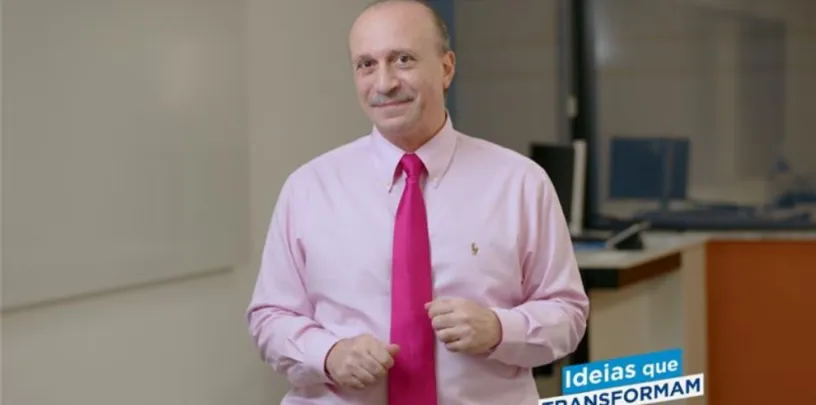
How do doctors manage their own businesses? How much do they know about management and what are the main deficiencies in the process? These were the questions that guided the research by Jamal Azzam , a former student of the Professional Master's in Management for Competitiveness (MPGC).
Throughout the research, Jamal was able to study entrepreneurial initiatives and deficiencies in management knowledge, especially due to the flaws and gaps that exist in the doctor's academic training.
As a doctor, Jamal realized that his overall ability to manage and administer his own business was very lacking, and this motivated him to understand how to improve this process during his master's degree. “This master's degree meant a lot to me, because I trust FGV as a trainer and manager,” he said.
Today, as coordinator of the Medical and Dental Clinic Management course, he understands that the prospect of doctors improving their management is fundamental for their business, after all, doctors have the characteristic of being entrepreneurs, as they open offices and clinics.
The doctor's motivation was triggered by a lack of payment to a health insurance plan.
“I used to work with several health insurance plans and I discovered that one of them was not paying for several consultations, procedures, surgeries, and exams, but I didn’t know why I wasn’t checking. And then, one day, I discovered that they weren’t paying. And I managed to recover that amount, with great difficulty,” he highlighted.
See the full interview below:
What perspectives were found in the research?
Half of all doctors in Brazil mix their personal and business finances. This is absurd, but it can happen. So the basic principle is not to mix your personal and business accounts. And this was one of the findings of the survey. The idea is to draw doctors' attention to their management deficiencies so that they can improve. And this has generated an increasing demand and has led doctors to increasingly seek management studies. So much so that we are seeing an increase in the demand for both MBAs and medium-term courses.
Could you tell us more about the project?
I am a doctor who graduated from the University of São Paulo Medical School in 1986, and soon after graduating, I opened a clinic. I accepted several insurance plans and a few years later I discovered that one of them had failed to pay for several consultations, procedures, surgeries, and exams. However, I didn't know why I didn't check the data. I simply sent the invoices and paid what was paid. One day I discovered that they weren't paying. And I managed to recover that amount with great difficulty. That was in 1997 and it made me realize a very important question: they know more about my management than I do. And that's when I started thinking about management and how important it would be for a doctor. After all, doctors have the characteristic of being entrepreneurs, they open practices, they open clinics.
And over the years, I completed my first MBA in Strategic and Economic Business Management at FGV in 2008, and later completed an extension of the MBA at the University of California, Irvine. In 2012, I completed an MBA in Business Intelligence at Fundação Getúlio Vargas. And in 2016, I was a student in the first class of the MPGC.
What are the objectives of the research?
The objective of the research was to understand how doctors in Brazil practice management, how much they know about the subject and their main deficiencies in the medical field. The focus is on optimizing and improving management to achieve better results in the provision of health services for the benefit of patients and the population as a whole.
What was your motivation?
Do health insurance companies know more about the management of a doctor's office or clinic than the doctor himself? This opens the door to countless distortions. My motivation is to help doctors optimize this process and improve their management for the benefit of the patient and the population.
Do you have any professional connection to the topic?
I was an entrepreneur for 30 years and I still am an entrepreneur for 38 years, and now I have a degree in Management through the Professional Master's Degree in Management for Competitiveness (MPGC). I have this issue where I am both a doctor and a manager, so I see both sides, especially in clinics and medical offices.
Why did you decide to take the master's degree at FGV EAESP?
FGV is the institution of greatest excellence in management in Brazil and a reference for all others. In addition, it is very solid with top-notch professors. That was my main incentive. But naturally, I already had a career within FGV, as I did my first MBA in 2018, and I went to the University of California through FGV. So I already had experience with the institution and decided to do my fourth course there, in addition to the other short and medium-term courses that I had already done at the Foundation. But this master's degree meant a lot to me, because I trust FGV as a trainer and manager.
How was the transition from student to teacher?
This is a transformative magic in my professional life. It's incredible because I became a teacher after 30 years, an entrepreneur and a doctor, that is, I already had my skills and my deficiencies in management. I got a lot of training that the School gave me, it gave me the tools so that I could now give back to society with my experience, after all, I have a greater purpose, which is to benefit our patients, human beings, with better health.
To learn more about the Professional Master's Degree in Management for Competitiveness (MPGC) at the São Paulo School of Business Administration (FGV EAESP), visit the website .
This article is part of the series Ideas that Transform .