Internationalization: The impact of master's and doctorate degrees on professional careers

Internationalization in FGV's master's and doctoral programs is a strategic differentiator that broadens horizons and connects students to the global market. Through partnerships with renowned institutions abroad, exchange programs and dual degree opportunities, students have access to academic training aligned with international standards.
This experience not only provides the opportunity to improve global skills, such as fluency in other languages and adaptation to different cultures, but also strengthens networks with professionals and academics from all over the world. This approach prepares students to face the challenges of an increasingly competitive and interconnected job market, making them protagonists in their fields.
This is how Giovana Frota, a student of the Professional Master's Degree in Management and Public Policies at EAESP, Bruno Aguiar , a student of the Professional Master's Degree in Law and Entrepreneurship at FGV Direito SP and Camila Tsibana , a student of the Professional Master's Degree in International Management at FGV EAESP, faced the challenge of studying abroad during their master's degree.
“My international experience was fantastic. We had the opportunity to visit the Supreme Court of Singapore, we visited the Petrobras branch in Singapore, Vale and we also got to know the startups , there are more than 3,000 startups in a gigantic region of Singapore”, highlighted Bruno Aguiar.
See the full interview below.
How does the sandwich master's degree work?
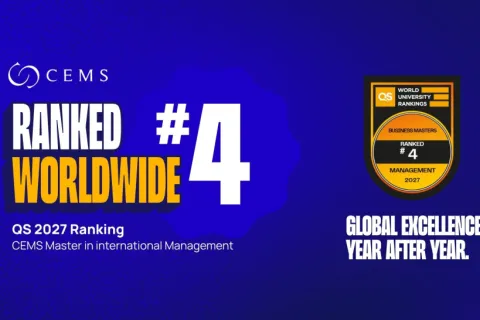
Camila – In the sandwich master's degree I did at MPGI, we had the opportunity to study at two of the 34 schools that are part of CEMS - Global Alliance of Business Schools. In my case, I studied one semester in Singapore and one semester in Japan. We graduate with a diploma from FGV and CEMS.
Which international school did you study at?
Giovana – I did my exchange at Hertie University, which is in Berlin, Germany, and among the universities for public policies, it is one of the most respected, which is why I chose to go there.
Camila – I studied at the National University of Singapore – NUS, which is also one of the most prestigious in Asia, and at Keio University, which is in Tokyo, Japan.
Bruno - I studied at the National University of Singapore – NUS, where I took the International Taxation course.
How was your international experience?
Bruno – My international experience was fantastic. We took a trip with Professor Mário and the professors from FGV. They accompanied us from the beginning to the end of the trip. We had the opportunity to visit the Supreme Court of Singapore, we visited the Petrobras branch in Singapore, Vale and we also got to know the startups , there are more than 3,000 startups in a gigantic region of Singapore. It is a truly incredible city and this experience was magnificent.
Giovana - My experience was also incredible. Spending four months in Berlin went beyond all the learning I had from taking the Data Science for Public Policy courses, which are a little different from here. It was very important for me to have this contact with people from other cultures, not only from Germany but also from other countries that I studied with there.
Camila - For me, what stood out the most was the diversity of nationalities. There were 40 students representing more than 20 nationalities; it was a truly international environment. You could see that all the teachers had a lot of experience. They also talked about very local issues, so you really got to know the market and the culture in depth, and gained insights that could later be applied to all other countries. That was really cool. In addition to that, the experience of living in another city was enriching in every way.
See the full interview here.
This article is part of the series Beyond Academia , see the other contents of the Series below: