Academic entrepreneurship: get to know companies that have emerged in research institutions

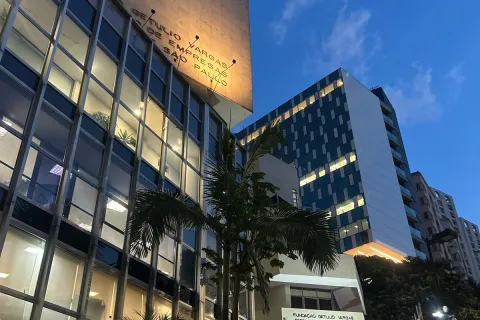
According to the Sebrae Startups Observatory, Brazil has become the third largest startup market in Latin America. A significant part of this growth comes from startups that emerge in an academic environment, where many Brazilian universities are investing in creating their own incubators and accelerators. These initiatives support startups founded by students and researchers by providing resources such as mentorship, physical space, and access to investor networks. Institutions such as the Getulio Vargas Foundation (FGV) and the State University of Campinas (Unicamp) are examples of academic environments that rely on this type of structure to transform research into innovation.
The Getulio Vargas Foundation accelerator is called FGV Ventures, and has existed since 2016 with the purpose of fostering ethical entrepreneurship with high growth potential. While Unicamp, through its Innovation Agency Inova Unicamp, has an incubator called Incamp – Unicamp's Technology-Based Business Incubator. Inova manages Incamp and since 2003 has sought to establish a network of relationships between the University and society, in order to increase research, teaching and knowledge advancement activities.
Challenges and opportunities faced by startups that emerge in an academic environment
Although these startups have the structure coming from research institutions, the coordinator of Innovation and Entrepreneurship Environments at Inova Unicamp, Mariana Zanatta Inglez, is categorical in stating that academic entrepreneurship brings with it some difficulties.
"Entrepreneurship is no longer easy, and entrepreneurship from university technologies is even more difficult. We see some challenges in the incubator's day-to-day life, such as the need to transform a person, or a team, that has a very academic bias into entrepreneurs. They are usually people who understand a lot about the technology they are developing, but little about the market," Zanatta introduced.
The coordinator adds that being able to count on financial resources and knowing how to manage them to develop, manage technological resources to evolve the initial prototype, and convince the market to purchase the product, are other challenges faced by startups that arise in an academic environment.
For the director of FGV Ventures, Luciana Cualheta, startups that emerge in research institutions can not only create innovative initiatives, but help society face global challenges such as food security, social inequality and climate change.
"Given that academia can gather science-based information, it is possible to use this information to take practical actions in line with the public and private sectors," Cualheta said. The director also stated that nowadays it is not enough for startups to think only about managing profits, but also about the externalities caused by the company.
"That is why one of the criteria to go through the FGV Ventures acceleration program is that participants describe the externalities caused by the particular business they are looking to accelerate, and at the same time, a plan to minimize these externalities," he added.
Success stories
Inova Unicamp was present at the Innovation for Competitiveness event, organized by FGV Ventures in partnership with FGV's Research and Innovation Network. The event took place on March 27, at the School of Business Administration of São Paulo (FGV EAESP), when both institutions presented successful cases on startups that were incubated and accelerated in university environments.
On the occasion, Mariana Zanatta Inglez presented the startup Rubian, which applies supercritical extraction technologies developed at Unicamp to obtain natural extracts of derivatives from the extensive Brazilian biodiversity, such as annatto, passion fruit and jabuticaba. The startup that emerged from the business modeling competition Desafio Unicamp uses these inputs to produce lipid, vitamin, antioxidant and carotenoid extracts, which have benefits to fight diseases such as obesity, diabetes, cardiovascular problems, hepatic steatosis, prostate inflammation and skin aging, in addition to producing dyes and flavors.
Another startup presented was S Cosméticos do Bem, which, like Rubian, went through Incamp's incubation program. It also applies technologies developed and licensed from Unicamp to produce dermocosmetics. Zanatta also presented three other companies that are currently incubated at Unicamp's Technology-Based Business Incubator: BGEnergy, which operates in the area of green and low-carbon hydrogen; Rhizobioma, which develops bionematicides capable of replacing pesticides and chemical agents in the control of planting; and Defense Fertilizer, which operates in the area of biopesticides for coffee rust.
Another innovation that emerged in an academic environment and was present at the event is the startup IWASTE. Conceived by entrepreneur Frederico Vieira and accelerated by FGV Ventures, the startup offers innovative and sustainable solutions for industrial waste management throughout Brazil, by transforming waste into valuable resources, which optimizes the company's entire logistics chain and promotes environmental sustainability and financial efficiency for its customers.
"We work with waste that no one knows what to do, such as ash from a biomass boiler. But in addition to delivering environmental efficiency, we also deliver financial efficiency, so we work very hard reducing costs, and increasing revenues from all types of waste. An example of how we apply this waste as a raw material in an innovative way is the use of biomass ashes to use as raw material for car batteries, as it has fantastic electrical conductivity", explained Xavier during the Innovation for Sustainability panel.
Other sectors that can benefit from solutions developed in academic environments are: the health sector and the automotive industry. The startup Carristas, which was also accelerated by FGV Ventures, seeks to transform the management of auto repair shops by connecting customers with different vehicle services. Conceived by entrepreneur Rafael Ferreira, the business features a space on the internet or app, in which car owners can connect to service providers, and follow the service in real time.
"Mechanical workshops waste time due to lack of organization and very manual management, and vehicle owners feel a lack of transparency in this process. Therefore, the Carristas platform offers transparency in the monitoring of a service in real time, in which the workshop uses a system that allows the customer to follow all the details, including parts, stages of the process and delivery forecast", presented the entrepreneur Rafael Ferreira during the panel Innovation in the automotive sector.
In the health area, the company Healz offers marketing technology for this sector. The startup is led by entrepreneur Gabriela Rosolen, one of the founders of another startup that was accelerated by FGV Ventures: WILU. The company connects users to different health specialties ranging from mental and physical health to professional development.
It is possible to check out the presentation of these startups in the broadcast of the event that took place on FGV's YouTube channel: broadcast of the event during the morning and broadcast of the event in the afternoon.
To learn more about FGV Ventures, visit the website.
To learn more about Inova Unicamp, visit the website.