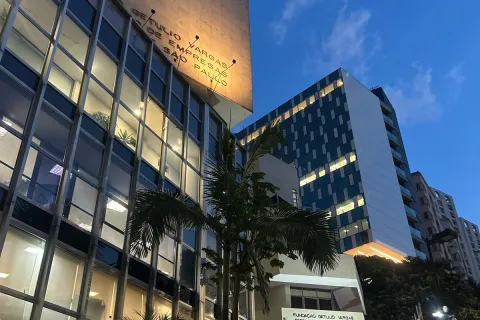
Study reveals that the most widely used herbicide in Brazil increases the chances of infant mortality
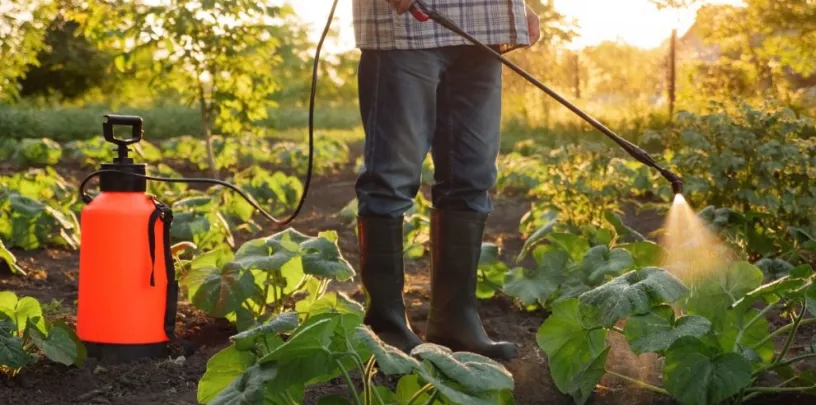
Glyphosate accounted for 62% of herbicide use in Brazil between 2009 and 2016 , especially for soybean production. In 2017, the substance accounted for 30% of the most widely used herbicides worldwide. It is estimated that since the 1990s, after the creation of seeds resistant to the substance, the use of the product has increased by about 15 times. Furthermore, according to DataInteligence, the application of Glyphosate in agricultural plantations is expected to increase by 800% by 2025. In this scenario, a study by the Getulio Vargas Foundation found that the product has effects on human health and identified an increase in infant mortality in regions close to where Glyphosate is applied.
The study indicates that between 2000 and 2010, there was a 5% increase in the infant mortality rate, which corresponds to approximately 503 infant deaths per year of children whose mothers lived near where glyphosate was applied, more specifically, in the path of the flow of water carrying the substance applied to agricultural plantations to rivers, streams and wells. The period analyzed in the research coincides precisely with the time when there was an expansive increase in the use of glyphosate.
Despite these indicators found by scientists, researcher Rudi Rocha from the São Paulo School of Business Administration (FGV EAESP) , co-author of the study, states that this number probably underestimates the general effect of Glyphosate use on human health:
“There is concern about the subclinical toxicity of these substances in general populations, who are not directly exposed but are exposed to low concentrations through the ingestion of contaminated water or food,” explained the researcher. He also emphasizes that this type of poisoning is just the tip of the iceberg, as pesticides like this are capable of causing a wide range of asymptomatic effects at very low levels of exposure that do not produce obvious signs and symptoms.
“The population affected by this subclinical toxicity may be much larger than the portion affected by direct exposure,” he warned. Rocha also contextualizes that it is not clear how this indirect contamination has relevant effects on human health, therefore, he highlights the importance of studies like this to understand the consequences of pesticide use in general, in order to contribute to a public debate on the subject, which until now, has been dominated by economic interests and scientific controversies.
According to the researcher, producers of this herbicide usually claim that the physical and chemical conditions of the product are good, with a short half-life that causes the glyphosate to decompose into another substance that is not very harmful. However, there is already scientific evidence that has confirmed the presence of the product in water collected from rivers, streams, among others, in locations other than the region where the product was applied.
Conducting the experiments
Rudi Rocha points out that scientific evidence has already proven in the laboratory that human embryos are particularly sensitive to environmental conditions and to glyphosate. When applied to crops to eliminate weeds, the product may be capable of affecting placental cells and the fetus. To test the level of this effect, Rocha conducted a series of econometric estimates, together with researchers Mateus Dias, from the Católica-Lisbon School of Business and Economics, and Rodrigo Soares, from the Institute of Education and Research (Insper). The group analyzed municipal databases that cover all cities in the South and Center-West regions of the country.
In order to capture the effect of glyphosate on human health, the group first had to eliminate correlated issues. “It is very difficult to measure the impact of pesticides on human health for a number of reasons. It is delicate because many regions that use these products start to grow economically, connecting with other regions, generating immigration, etc. So it is a challenge to specifically isolate the effect of glyphosate on health,” said Rudi Rocha.
To measure the effect of the product on human health without socioeconomic interference, the researchers used an econometric method based on a statistical technique known as an “instrumental variable”, capable of measuring the natural suitability of Glyphosate at a local level, without being correlated with other characteristics.
“We explored the idea that when applied to a specific area, this herbicide can contaminate the soil, and through the flow of water be carried downstream, affecting people who consume water far from the place where the pesticide was used,” explained the researcher.
The study used databases of river basins in Brazil to investigate the flow of water in each basin and link this information with birth data in the country. In addition, precipitation data was also used to identify the level of rainfall, in order to assess whether the flow of water was capable of carrying glyphosate to other regions.
“The idea was as follows: in a given location where there was an increase in the use of the substance, which occurred mainly after the release of the use of genetically modified soybean seeds that are resistant to glyphosate, we analyzed the impact on children's health in populations living in nearby regions, considering the underground and surface water flow. In other words, if an agricultural producer applies glyphosate to a plantation, after rain or irrigation, we look at the municipalities that would be below that region, through which that potentially contaminated water would pass,” explained Rocha.
When the flow of water is fatal
When investigating the presence of glyphosate in this water flow, the research found deterioration in children's health precisely in areas close to and downstream from where there was an increase in glyphosate use. This increase grew considerably from 2004, when there were changes in the law to allow the use of genetically modified soybeans.
Furthermore, the greater the volume of rain in the region where the product is applied, and the steeper the terrain, the greater the spread of the substance to the surrounding regions and, consequently, the greater the impact on infant mortality. “When it rains more, and where the terrain is steeper and has a higher level of erodibility, the rain carries the product to other regions more quickly,” claims Rocha.
In addition to infant mortality, the research also identified an increase in premature births and low birth weight, also in the regions within the flow of water, which goes from the agricultural plantation where Glyphosate was applied to the residences located downstream.
To ensure that the harm caused to human health came from the specific herbicide and not from other substances present in the water, the researchers performed a series of robustness tests, which assessed the accuracy and stability of the estimates. “We used data from water treatment plants to check whether other substances besides glyphosate were present, and no traces of other products were found,” explained Rocha.
Finally, the researcher reiterates that the mortality profile is consistent with what would be expected from exposure to glyphosate during pregnancy: 56% of the total effect comes from conditions in the perinatal period and 19% comes from respiratory conditions. He adds that scientists have recently re-examined claims that glyphosate is a safe pesticide with little or no effect on human health.
“There was already data on the direct effects of glyphosate on human health, as farmers have often used this product and become ill after handling it. However, there was no information on how this substance can affect the health of the surrounding population. Since these results were unknown when the current regulations were established, a new discussion should be initiated on the regulatory framework for the use and handling of glyphosate-based herbicides,” he concluded.
To read the full study, click here .
For more information about FGV EAESP, click here .